
Prepare evidence before advertising
Collect the registration certificate, service history, roadworthiness information, repair records and keys. Establish whether finance, co-ownership, a recall or another restriction needs resolution before transfer. Ask the relevant lender or authority for the actual process rather than promising the buyer that it will be easy.
This site provides a selling guide, not a vehicle-listing marketplace. It does not take payment, arrange escrow or guarantee a buyer.
Write an accurate advert
Describe the vehicle you have: model, registration year, transmission, fuel type, mileage and its unit, known defects and included equipment. Distinguish an imported vehicle's first registration from its later Cyprus registration. Avoid claims such as “accident-free” or “full history” unless you can support them.
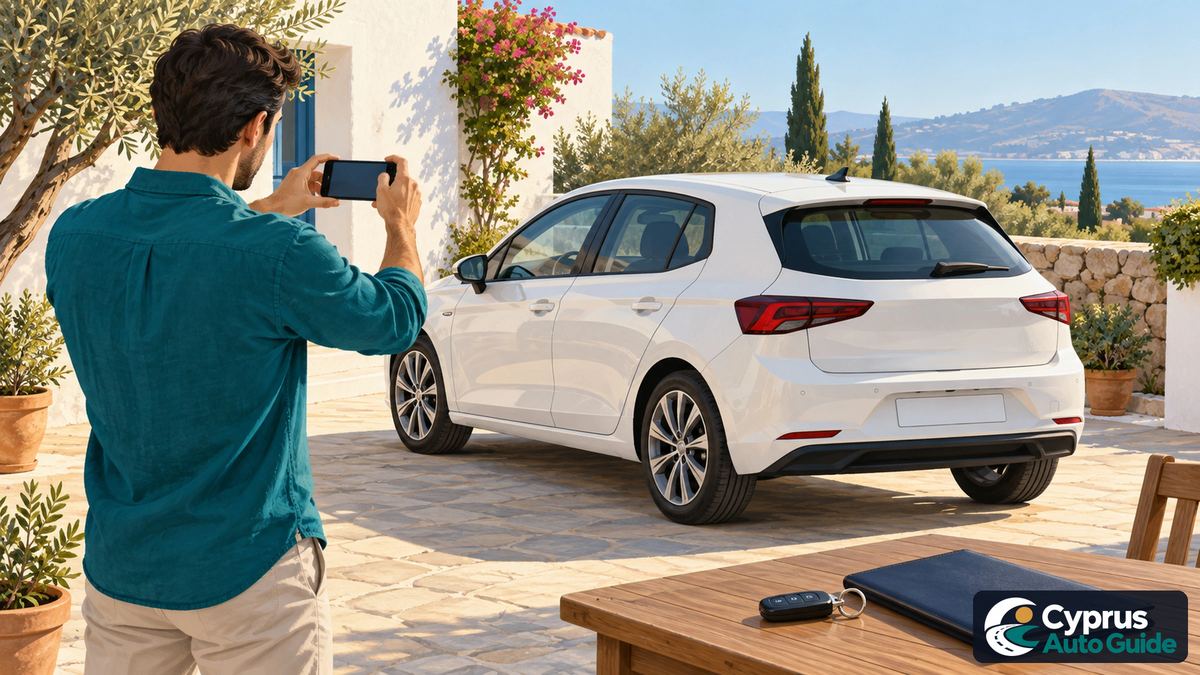
Photograph the car in ordinary light and show relevant damage. Remove personal papers and location-sensitive items from view. Share enough information for a serious buyer to assess the car, but do not publish identity documents, signatures or financial details.
If you have priced the car using other adverts, remember that asking prices are not evidence of completed sale values. Explain your price using documented condition and equipment without promising investment value.
Arrange viewings and inspection
Agree a time and safe location. Keep possession of keys and original documents until the agreed handover. Permit reasonable independent inspection and agree who pays for it. If the buyer requests a road test, confirm licence entitlement and insurance before anyone drives; your own cover may not extend to that person.
Record material questions and answers in writing. Disclose known faults rather than relying on a broad “sold as seen” phrase. Private-sale protections differ from trader consumer guarantees, but that does not establish that every private-sale promise is unenforceable.
Agree payment and transfer together
Put the price, vehicle identity, deposit terms, included items, disclosed defects and completion plan in a signed agreement. State what happens if the official transfer cannot proceed or an agreed inspection condition is not met. Do not sign blank forms.
Verify receipt of payment through your own bank or payment provider. A screenshot, forwarded email or a buyer's assertion that money has been sent is not confirmation that it is available. Ask your bank about the finality and risks of the chosen method before accepting it.
Confirm the current transfer paperwork with the processing office. Older form copies circulate online and may be obsolete. Coordinate the sequence of payment, official transfer and physical delivery so both parties retain evidence of completion.
At handover
Record the date, time and odometer reading. List keys, service books, charging cables and other agreed items. Give the buyer relevant vehicle documents and keep copies of the agreement and transfer confirmation for your records.
Remove personal data from the vehicle's navigation, paired phones and manufacturer account, following the manufacturer's instructions. Deal with any parking or charging accounts linked to the registration. Contact your insurer about ending or changing cover after the handover arrangement is settled; do not assume the buyer is covered by your policy.
For the other side of the transaction, read the used-car buying sequence and insurance guide.